Monday, November 24, 2014

Snapping the Pieces Together


Snapping the Pieces Together by Jon Stark
November, 2014, about 1100 words

Blustery is probably the best word, because the wind was fierce and when you’re on the corner of 31st and Avenue of the Americas it’s hard to find someone to help you.  There was one nice man but he apologized, said he was from Brooklyn, and had no idea where Garrett’s was.

If you have never been to New York City than you can’t imagine how big it is.  Not really.  You can’t sympathize with the man from Brooklyn who didn’t have a clue about the iconic popcorn shop that I hadn’t even heard of before this trip.  And I lived there for years.  Brooklyn, not Manhattan.

Which makes another interesting point.  If you’ve never lived in New York City you don’t know how small it is.  You know how Legos all sort of snap together and make up interesting things but all the interesting things – death stars and Hogwarts and race cars – are made up of the same blocks?  That’s New York.  A thousand small towns where everybody knows everybody all snapped together and connected by a half dozen bridges and tunnels into a 7 million person metropolis.

I don’t live there anymore.  And my girlfriend said that when I came back I’d better have a bag of caramel corn from Garrett’s.  Apparently, to her, Garrett’s is New York.  I have another friend who told me to make sure I had a knish.  “It isn’t a trip to New York without having a good knish.”  For me it is.  I don’t like them.  Maybe a slice from Cosimo’s or D’Angelo’s but I didn’t bother with that this trip, New York isn’t about the food.  Not once you’re from there.

Not that I was ever from Manhattan, but I spent a lot of time in the lower part, down by Battery Park and Pearl Street and the towers.  That’s New York to me.  They’re gone now.  What they’ve put back is a sign of the city’s decline.  They dress it up with fancy language, but the truth is obvious.  If New York was still the center of the universe and a place of opportunity and growth, they’d have built something big.  Real Estate that valuable wouldn’t have been used for a memorial.

Don’t get me wrong, I think a memorial is good.  When I was dating Toni -- when I lived in Brooklyn --she and Mike’s wife had to go across the bridge for a procedure so Mikel and I went too.  And her son Brandon.  He was probably about three.  I didn’t know anything about being a father, wasn’t interested in being a father, but Mike was so it was a good day.  Sometimes I wonder if Brandon remembers that trip or if we were just part of the blur of faces that came in and out of his mother’s life.

The twin towers of the World Trade Center were huge.  You know what I mean if you’ve ever stood at the foot of them and looked up.  I remember one time driving across the Brooklyn Bridge and seeing the towers disappear into a cloudbank only to emerge into bright sunlight a few hundred feet later.  They were like mountains, sheer unassailable cliff faces rising from the bedrock with more concrete and glass than my hometown.  We wandered in their shadow and stumbled across a firehouse.

There was no Dalmatian but the young men working there were friendly and went out of their way to show Brandon everything there was to know about their truck and the garage.  They even took us all upstairs to see the barracks and kitchen.

I think of those men every time I see smoke in the towers.  I hope they transferred before September.  It doesn’t change the tragedy of what happened but maybe the people who died weren’t as nice.  Bad things should happen to bad people.

There was a girl I knew who worked there.   In the towers, not the fire house.  Her name was Tricia and she liked Pinot Noir and I couldn’t afford to take her out again.  We’d meet socially on occasion and I liked to think she always wanted me to ask again.  I almost did a couple of times, but she was out of my league.  Or I was just scared.

When I stood at the construction site of what used to be the towers I overheard an old woman complaining to her daughter and grandchildren that she’d never been to the top of the towers.  She’d had the chance but didn’t want to spend the $17.  It was a regret, she said.  Don’t be cheap when life offers you a chance for something wonderful.

It made me think of Tricia.  I don’t usually think of her when I see the towers.  But it did then.  Her office was above the line.  Impossibly high.  I thought about her fear.  Her terrible choice.  I think she would have jumped.  I looked at the street, the broken sidewalk where I stood and wondered if maybe that was where she landed.

Or someone else.  I was suddenly overwhelmed and my knees buckled and the city around me became a blur and I had to get out and I couldn’t understand how the woman could complain about her life being incomplete when she was still alive and how could anyone blow their horn in impatience there, in the cramped quarters of the final resting place of thousands of souls who had loved the city and hated the city and gone to work excited or hung over and had plans for weddings or birthdays or were expecting children or grandchildren and it made me terribly sad.

And that was New York to me, not knish and certainly not Garrett’s Gourmet Popcorn but here I was, wind tearing at my ears and killing time before my train following directions on my iPhone that told me I was right there but I couldn’t see it.  The man from Brooklyn couldn’t see it.

And then I did see it.  I’d over looked the door a hundred times.  You know how it is, if you’ve ever looked for a special place in New York.  No awning.  No real store front.  Just a door and a window and a small sign that said, “Garrett’s.”


The door was open.  A woman held it for a family that must have been from North Dakota because they were in shirt sleeves and the rest of the world was freezing and I saw her face and it was Tricia and she was alive.

Monday, November 17, 2014

Strings Attached

I hope you enjoy today’s no-frills story.


Strings Attached
by Jon Stark
November, 2014

“Just us?”  Stephanie smiled.  His voice had that power.  It did other things too.  If she was fourteen she’d be up until midnight listening to his radio show.  That she hadn’t been fourteen in twenty years and he wasn’t a DJ didn’t diminish the fantasy in the least.

He always dressed well, one of the many traits she admired.  She took fact that he was wearing the tie she’d bought him for his birthday as a good omen.  She said, “You look good in that tie.”

He looked down at it.  “Thank you.  I think my kids got it for me a couple of Father’s days ago.”  She frowned, almost corrected him, was distracted by his eyes.  Oh, those eyes.  He said something about the restaurant being a nice place.

It was a nice place.  She didn’t remember it being so expensive.  She’d wanted nice, but the prices.  How did they stay in business?  There was hardly anyone even there.  When the waiter came she ordered soup.  Not even with a sandwich or salad.

He ordered the Beef au Jus without hesitation.  It made her shiver.  He was a hunter, a strong meat eating man, confident with what he wanted and rich enough to get it.  He hadn’t even looked at the menu.  This was his kind of world.

They made small talk.  Mostly he talked.  And smiled.  He could be reciting the Oxford Dictionary for all she cared.  As long as it was the unabridged version so that it would take longer.  Watching the big words roll off his tongue, between lips that had been sculpted by some divine agent.

He paused when the food arrived.  She made her move.  Asked how he was getting on with his family out of town.  Through a mouthful, slow trickle of au Jus on his chin, he said, “I’m not going hungry.”

Her turn.  A nod.  Then, “You sure?  I’ve got the afternoon off.”  She hadn’t practiced the words, exactly, but she’d been working on the tone.  And the look.  Combined with the outfit she’d bought on Tuesday he got the message.  Knife and fork stopped moving.  She could barely hear him over the rush of blood through her ears.

“Steph, I hope I didn’t give you the wrong idea.”  That wasn’t his line.  He was saying it wrong.  She missed most of the rest of what he said.  The crackers were stale.  $30 for a bowl of soup and the crackers were stale.  It made her so angry.  “… what you’re offering.  I’m flattered, truly, but it isn’t what I want.”

“What about what I want?” she said.  It sounded harsh, even childish.  She hadn’t practiced this at all.  How could he be saying that?

He shook his head.  “What about what Leslie wants?”  Our kids?”  So he’d thought about it.  She tried to get back to before, to when she had him.  “I’m not like that.  Never have been.  Never even thought about it.”

That couldn’t be true.  She didn’t want it to be true.  Those eyes.  They said it was true.  And the crackers.  Could it get any worse?  She needed something.  Tears were dangerously close.  He had to give her something.  “What if you didn’t have Leslie?  What if there were no kids?  What then?”

He did her the courtesy of thinking about it.  She thought he might even be appraising her, appreciating the effort she’d put into her hair.

“If I hadn’t found Leslie?  Was unattached?”  She nodded, encouraging him.  “I think I would probably be very interested.  You’re a remarkable woman.”  The words washed over her, cleansed her, warmed her.  She forgot about the crackers.  Move the conversation on.  Worked on getting back to normal.  He played along.  Nothing had happened.


She thought about what he said, nodding as he spoke now but not really paying attention.  If there was no Leslie he’d be interested.  She didn’t remember slipping the knife into her purse when the check came, but fishing for her keys back at the car, wondering where to go now that she had a free afternoon, it was there.

Friday, November 14, 2014

Different isn't bad when it's done well

I’m reading a John Hart novel.  I’m writing my own novel.  (Not nearly as good as his.)  It’s really showing me just how different novels and screenplays are.  He’ll spend two paragraphs describing a scene, vividly and well, but in a screenplay I’d have to do it with a single sentence, reduce it to the most visceral part.  That’s the advantage and bane of many pages.  I’m a feature length script into the book and have barely passed the introduction.  It’s why books are almost always better than films.

I’m playing a game with the book.  It’s called, “How would I turn this masterwork into a screenplay?”  It’s making me do the sort of analysis that high school English teachers dream about.  BTW – Mrs. Odell, if you are reading this, I still don’t think you’re right about the black pot in Red Pony but I’m mature enough now to let it go.

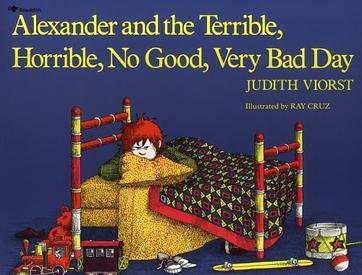
Novels are hard to transpose to screen.  That’s why a lot of films start with the words, “Based on the short story XYZ.”  Last weekend I watched a movie based on a children’s book.  It was nothing like the book.  Really.  Not the least bit.  That’s okay.  Alexander’s Bad Day was still fun.


If you like Steve Carell, you will like the movie.  If you don’t?  You won’t.  I haven’t met anyone who is indifferent about him (sort of like Woody Allen) so I don’t see a need to comment on that further.  Instead, let’s look at book to screen conversion.

Similarities:
1         * Almost the same title.
           * Has a character named Alexander.

Differences (described from movie):
1         * Doesn’t take place over a single day.
2         * Has magic involving birthday wish.
3         * Takes place in the burbs.
4         * Alex isn’t the guy with the bad day.
5         * Has crocodiles and male strippers.
6         * Is about Steve Carell.

It’s sort of like how The Perfect Storm is based on a true story but 75% of it is a total fabrication, including most of the conflict and character development.


I loved it because it was fun and exactly what was advertised.  Nobody in it expected to win an Oscar.  My wife called it her new favorite movie.  Different isn’t bad when it’s done well.