Showing posts with label Friday. Show all posts

Friday, March 10, 2017

And This Bag Was Just Dancing With Me


There's a stoy in screenwriting circles about a floating plastic bag and the inspriation for the film "American Beauty."  I like that story, and I found Mr. Alan Ball's script for the film to be extremely well written.  I don't see the what he saw when I look at discarded shopping bags, but it's stuck with me and I've wondered about how he must feel in places such as San Francisco that have declared the ubiquitious liter to be detritus-non-gratta.
The following is a work of fiction and did not occur (to the best of my knowledge).  Any actual quote of Mr. Ball which I did not fabricate on the spot is intended only as an aid for readers who care to search out what he has to say on the topic of plastic bags using "Ctrl-C" and Google.


A Thing of American Beauty
(by Jonathan Stark, 800 words)

Councilman McTaggart yawned as he shuffled the papers on the table in front of him.  The florescent lights overhead flickered and the blueish bulb in the third fixture went out.  Then it came back on.  He looked at Councilwoman Harris on his right, then Councilman Greene on his left.

McTaggart cleared his throat.  Then looked at Councilwoman Harris again.  She looked up from her phone, said, “Oh, right.  Sorry.”

 Harris opened the folder in front of her.  She’d borrowed it from her daughter and the sight of the kitten falling of the tree branch on its cover made her heart skip a beat.  That poor cat.  Driven by duty to her electorate, she pushed aside her concern for the wellbeing of the animal and read from the first paper inside.

“Next order of business is proposition seventeen dash zero zero zero six,” said Harris.  McTaggart snickered.  So did Greene.  They always did when she said “proposition” and sometimes she’d snicker too but not this time.  Zero zero zero six was important.

Harris continued, “The council proposes a ban on the issuance and use of plastic bags within the city limits by grocery stores, restaurants, convenience stores, food carts, Yancy’s Lumberyard, and school lunches due to the unsightly problem of excessive plastic bags on the sides of city streets, in yards, clogging parks, congesting sidewalks, blocking bus grills, and filling the shopping carts of homeless people.”

McTaggart said, “All in favor say, ‘Aye.’”

A well-dressed man transitioning from handsome middle age to distinguished older gentleman, stood and said, “According to bylaw section twelve paragraph ‘C’ you must open the proposition for discussion.”

McTaggart and Greene snickered.  Then McTaggart said, “Everyone is in favor, no need to discuss.”

“I am not,” said the man.  “You don’t realize what you are doing.”

Harris said, in her slightly schrillish voice, “Sir, the plastic bags are an unsightly problem in our city.  This prop-“ she stopped, bit her lip with a sideways glance at McTaggart, “-plan will solve that problem.”

“You may as well solve the problem of flowers,” said the man.  The bluish bulb went out again, but this time with a dramatic pop.

Henry Steed, well ensconced in distinguished gentlemen, attended every council meeting.  His quiet snoring always comforted the councilmembers, reminded them of the importance of their work.  The sudden interruption in the rhythm of the snoring when Henry awoke at the comparison of trash to flowers was disconcerting.

Henry said, “Are you mad?  What do flowers have to do with plastic bags?”

The other man opened his mouth to speak but stopped.   Henry’s face changed, lightened with sudden realization and agreement.  “Councilman McTaggart, my esteemed colleague –“  he paused, turned to face the man, “Sorry, what’s your name?”

“Alan,” said the man.  “Alan Ball.”

Henry nodded his thanks and then went on.  “My esteemed colleague Mr. Ball makes a valid point.  You have not included Shane’s Florist in the ban.”

“The amendment is approved,” said McTaggart, casting a commanding look at Harris who dutifully wrote ‘Shane’s Florist’ in the margin of the proposition.

“That’s not my point at all!” exclaimed Alan.  “Have you ever seen a plastic bag caught in the wind?  Drifting along an alley, dancing on the updrafts and floating down only to be swept further along?”

Nobody had.

“I have,” said Mr. Ball.  “And was the most beautiful thing I’ve ever seen.”  They looked at him strangely.  Everyone.  “There’s a Buddhist notion of the miraculous within the mundane, and-“

Steed interrupted.  “We’re all good Presbyterians here, Mr. Ball.  No need to confuse things.”

Alan lost his flow.  McTaggart leaped into the void and dragged the rest of the council with him.

The ensuing debate ultimately resulted in a series of amendments that allowed school children to bring their lunches to school in plastic bags because the council, as eloquently expressed by Councilwoman Harris, “Did not want to discourage the arts among the young people of our great city.”

Henry Steed, who had been to Canada once, expressed his displeasure.  “The plastic bag is garbage, a thing of American pestilence that should be eradicated.”

Mr. Ball said, “You are mistaken.  It is a thing of American Beauty.”

Henry Steed rose from his folding chair, removed a carefully folded plastic grocery bag from the left breast pocket of his blazer, shook it open, and tossed it into the air.

The bag hung for a moment, as if orienting to the room, then gently floated downward only to be caught in the sudden down draft of the overhead HVAC duct.  Just as it was about to crash onto the vinyl tile of the floor, it whooshed toward the council table and rose on an updraft.

Councilwoman Harris squeaked and covered her mouth.  Her eyes were wide, filled with unshed tears, and she shook.  Never, in all her days had she been so moved.

“It’s just Steed’s bag,” thundered McTaggart, oblivious to the miracle he witnessed.

Councilman Greene snickered.

Friday, November 14, 2014

Different isn't bad when it's done well

I’m reading a John Hart novel.  I’m writing my own novel.  (Not nearly as good as his.)  It’s really showing me just how different novels and screenplays are.  He’ll spend two paragraphs describing a scene, vividly and well, but in a screenplay I’d have to do it with a single sentence, reduce it to the most visceral part.  That’s the advantage and bane of many pages.  I’m a feature length script into the book and have barely passed the introduction.  It’s why books are almost always better than films.

I’m playing a game with the book.  It’s called, “How would I turn this masterwork into a screenplay?”  It’s making me do the sort of analysis that high school English teachers dream about.  BTW – Mrs. Odell, if you are reading this, I still don’t think you’re right about the black pot in Red Pony but I’m mature enough now to let it go.

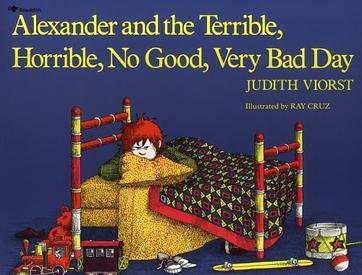
Novels are hard to transpose to screen.  That’s why a lot of films start with the words, “Based on the short story XYZ.”  Last weekend I watched a movie based on a children’s book.  It was nothing like the book.  Really.  Not the least bit.  That’s okay.  Alexander’s Bad Day was still fun.


If you like Steve Carell, you will like the movie.  If you don’t?  You won’t.  I haven’t met anyone who is indifferent about him (sort of like Woody Allen) so I don’t see a need to comment on that further.  Instead, let’s look at book to screen conversion.

Similarities:
1         * Almost the same title.
           * Has a character named Alexander.

Differences (described from movie):
1         * Doesn’t take place over a single day.
2         * Has magic involving birthday wish.
3         * Takes place in the burbs.
4         * Alex isn’t the guy with the bad day.
5         * Has crocodiles and male strippers.
6         * Is about Steve Carell.

It’s sort of like how The Perfect Storm is based on a true story but 75% of it is a total fabrication, including most of the conflict and character development.


I loved it because it was fun and exactly what was advertised.  Nobody in it expected to win an Oscar.  My wife called it her new favorite movie.  Different isn’t bad when it’s done well.

Friday, November 7, 2014

Gordon Bombay. Dream chaser.

We watched The Mighty Ducks.  It has held up well.  Except for the hair.  My goodness and people make fun of the eighties.  Emilio Estevez was at the top of his game and turned in a typical EE performance.  There was nothing the least bit surprising about the movie or story and it didn’t matter.  It was just plain fun.


And let’s face it, you don’t watch a sports movie with kids in it if you are looking for plot twists and surprises.   #3 summed it up best when he said, “It was pretty good.  I mean, it’s a movie about sports so you know what’s going to happen, but there aren’t very many about hockey so it was cool.”

If you’ve studied screenwriting at all you’re familiar with the “Same but different” mantra.  TMD delivers on that and manages to somehow rise above most of the other films in the genre.  Interestingly, the story is about learning to play by the rules and the triumph of everyman over the wealthy.  Team work is a distant backseat.  It’s there, but you’re fare more likely to hear, “Get out of here, Cake Eater,” than “That’s what teammates do for each other.”

Maybe it’s because I’m reading Steven Pressfield’s “The War of Art,” but I thought it was interesting that in the movie, Gordon (Emilio) leaves a high paying job on principle and then pursues the crazy dream of becoming a professional hockey player.  It plays well and gives us a wonderfully satisfying ending that everyone loves BUT if Gordon was our friend, would we encourage him to quit the law firm and follow the dream?


If you’re a writer, you are shaking your head and laughing.  It doesn’t work like that at all.  Unless you are blessed as I am with family and friends and who really think I can do this.

Friday, October 31, 2014

"But first you accomplish paint fence."

Watched 1984’s “The Karate Kid” with my children last weekend.  They were hesitant because they’ve seen the remake and didn’t think it was very good.  I haven’t seen it but they so didn’t like it that I doubt we’ll be able to do another comparison like “Red Dawn.”

TKK aged well.  The styles are out, naturally, and the fit and finish of the film is rough in a couple of places but if we are honest, they were rough in 1984 too.  The biggest thing for me was how young Ralph Macchio was.

I haven’t seen the movie in a very long time.  He was always older than I was.  They all were.  This time around they were kids.  And as an adult, I understand a bit more about what was going on.  Like why mom moved to California, why Ali’s acceptance of the poor kid from Reseda was so unlikely, and just how funny the dialogue actually was – sure, I caught a few of the jokes, but it is really clever.

The family conversation focused on pacing.  #3 complained that we were a half an hour into the movie and nothing had happened yet.  My daughter was incredulous.  “What are you talking about?  He’s moved across the country, gotten beat up by a gang, found a girlfriend, and we just saw the old guy kick butt.”  #3 said, “O.K., but he hasn’t done any training yet or anything.”

That’s a great point.  I don’t think you could sell the TKK script today because it takes so long to get to the meat of the plot.  There’s this idea that you have to rush into the action because the modern audience is savvier.  Forget the insult for a minute and focus on the result of that belief.  A remake that has lots of fighting you don’t care about.  If Daniel got beat up once, what are the stakes?  Why does he have to fight?  If we don’t meat Ali’s parents and her friends, why do we care that she dates Daniel?”  There’s no pay off.  And then what about Mr. Miyagi?  He is destiny and patience and wisdom rolled into one – if you rush him, you lose him.

And that would be a tradgedy.  All weekend I heard Mr. Miyagi quoted and my daughter is still chuckling about the scene in the boat when he falls off the seat laughing because Daniel fell into the pond.


My boys wanted to know if it was really possible to catch a fly with chopsticks.  I told them it was.  So is writing a movie that speaks to your children the same way it spoke to you.

Friday, October 24, 2014

You never know where you'll end up unless you never leave.

Last weekend I typed Fade out on a script.  I haven’t looked at it since and probably won’t until after Christmas.  I’d better not.  There has to be a “cooling off” period when you work on a project before you can effectively edit it.  The bigger the project/more you change, the longer that period has to be.  In this case, it’s a 113 page feature.

Thing is, typing Fade out was a bit anti-climactic.

I didn’t know why I felt that way, after all, I finished it – something I’d never done until just over a year ago.  I had allotted a month to write the first draft and I only needed 3 weeks.  I had no difficulty getting to the end I wanted without it being contrived (by Hollywood standards, anyway).  And it’s a great story.  I really like the protagonist and she gets to do pretty cool stuff.

So I went deeper.  Why didn’t I feel like I’d actually accomplished something major?  There are literally tens (maybe hundreds) of thousands of people who never get to Fade out.  It was my fourth feature script.  I’ve written a novel.  Getting to the end isn’t the goal anymore.  There was never a question in my mind that I’d be typing fade out within 30 days of typing fade in.

Getting that draft done was only the first step.  I know I have at least one more major revision draft and dozens of smaller passes.  Most likely – despite unwavering confidence in my awesomeness – I’ve got 2 or 3 more major revision drafts.  It probably won’t actually be “done” until next year’s contest season.

I’m excited about the script but that excitement is now tempered by experience.  It’s also a private story for now.  Even harder than the discipline needed to reach Fade out is not sharing the first draft with a trusted reader.  Stephen King knew whathe was talking about when he said NOBODY should ever see the first draft except for you. 

Nicole Sullivan


So it isn’t done, but that’s okay.  I’ve finished another important step on the way to being done.  I take heart in that and am reminded of the speech that Nicole Sullivan gave at graduation.  She quoted Winston Churchill – a man who understood scripting – who said, “Now this is not the end. It is not even the beginning of the end. But it is, perhaps, the end of the beginning.”

Friday, October 17, 2014

"It's a snow cone maker."

Great movies have something that elevates them above the conventions and standards of their time.  Easy examples are Casablanca and Charade which, while “old” when you watch, are still entertaining for new audiences.  I watched a pair of movies over the weekend that did not rise above their peers.  Actually, I watched 1 and a half movies.  We gave up on Crocodile Dundee.

I know you are cringing at that.  How could you give up on a classic that gave us such memorable lines as, “That’s not a kni-afe.  THIS is a kni-afe!”  Simply put, it wasn’t entertaining after 30 years.  They don’t make movies like that anymore.  If you have fond memories of that film, don’t revisit it.

The disappointment of CD led me to consider an observation I made back in the 90s when I was a fan but not a student of film.  Some of the movies I loved and watched all the time lost their luster and seemed cheesy 5 or 6 years later (or less).  When Iron Eagle came out it was amazing.  Everyone loved it.  There were even a ton of sequals.  But it’s not a good movie.  The year after IE, Top Gun was released.  It’s still good.  Somehow it rose above the genre and became more than just a summer blockbuster.

I freely admit to having been a fan of Steven Segal back in the day.  I must have watched Hard to Kill and Marked for Death a hundred times.  But they got old quickly.  I haven’t watched either in decades because the last time around they were so awful.  Yet other action movies from the same time, like Die Hard and it’s first sequel are still great movies (just remember they’re ‘R’ for a reason).  I’d argue that the first Die Hard is still far superior to the last installment.  (There was also my recent post about Red Dawn.)

So why are Terminator and True Lies so much better than Raw Deal and Red Heat?  What made Kindergarten Cop superior to Twins?  (You don’t get to blame James Belushi or Danny DeVito.)

I think it’s character.  Crocodile Dundee was larger than life, we can’t relate to him anymore.  But we all know somebody we think just might be Harry Tasker.  I certainly have met my fair share of fighter pilots who make Pete Mitchell seem humble.

Friday, October 10, 2014

Why isn't there an 'unlike' button?

I’ll jump right to it.  This week I read “The Social Network.”  Despite all of the problems and content that I didn’t care for, it was a well written and compelling script.  I have to say that I liked it, even though there isn’t a single reason I can think of to do so.  There isn’t a great scene, a grand hero, a victory, or anything, really, except a bunch of very smart, very small people being mean to each other.

Thing is, it’s about Facebook, and somehow that makes this story larger than life.

The problem I have with the script is the same problem I have with Facebook itself.  There’s a whole lot of trash mixed in with the lives of people I don’t really know or care about.  It’s a story of over-sharing and back stabbing without a hero.  It’s a story of arrogance and hedonistic self-indulgence.   And once you start it, you have to finish it – drunken drug-induced orgies and all.

To be fair, much like the real Facebook, the worst of the bad is hidden in subtext so the censors don’t have to cut anything out, but I have no intention of ever actually watching it.  What is there in the story isn’t entertainment.  Neither are videos of cats taking a bath, but they still get a lot of views.

Maybe that’s why I liked it?  It was a commentary on how banal the most successful social networking site in the world really is – and has been right from the get-go.

Don’t get me wrong, I’m not a Facebook “hater” but nobody can deny how much more narcissistic it has made our culture.  And at the expense of true knowledge – like what narcissistic means and where it came from.

If you want to write screenplays, read this script.  There are some interesting transitions and it uses flashbacks masterfully.  It also draws characters and settings extremely well.  Then there’s the pacing,  top notch.  It’s technically an outstandingly well executed document.  But if you aren’t writing screenplays, just watch the movie -- if you’re in to that sort of thing.

I know that doesn’t make any sense.  How can I be so down on it and still like it?  Still be thinking about the script days later?  Actually put off writing on my project so I could finish it?  It’s got to be the magic of the site itself, the addiction that keeps us logging in, time and time again.

Facebook really has changed the world.  Perhaps the allure of “The Social Network” is that of any creation legend, one that all mythologies must have.

Friday, October 3, 2014

"Wolverines!"

If grew up when I did, you already know what this post is about.

I may be rubbing off on my children.  We were browsing Netflix last weekend looking for something to watch and I came across 1984’s version of, “The Russians Are Coming” – though to be fair, it wasn’t a comedy.  I’m talking about Red Dawn.

I wasn’t sure how my kids would handle such an old film, it wasn’t black and white, but they are leery of anything described as “awesome” by their parents.  I had to explain the general state of mind in America at the time.  And about the Sandinistas and Contras.  They were game and we watched it.  There were a lot of questions, but they loved it.  So did I.  The film is definitely 30 years old but the story was strong.

We talked about the remake.  I was a bit skeptical that you could remake Red Dawn, it was, after all, about the Russians at a time when we were still afraid of them.  Who commands that sort of fear now?  The stateless terrorists?  Nope.  Even the veiled threat of China doesn’t wash in our house – what could the Chinese possibly gain by crippling their largest market?

I thought that was it.  But it wasn’t.  The next night they wanted to watch the remake.  To “compare and contrast, Dad.”  As a budding film student, I was on board, reservations about the film put aside in the name of study.  My daughter insisted that her vote had nothing to do with Chris Hemsworth.

What I enjoyed most about the film was the running analysis/commentary by the young folks.  “Oh, there’s that scene” and “Isn’t this about the time the pilot showed up last night?” offered mere minutes before the experienced fighting men arrived on screen.  The second best part for me was the unanimous agreement that the original was far better.  Not just better.  Far better.  They liked the 30 year old movie.  The one without Chris Hemsworth.

It’s easy to see why.  The driving antagonist in the film was fuzzy – while the original had a tired Cuban we got to know leading a scary Russian assault, the new one had a generic and 2 dimensional North Korean.  Nobody is afraid of North Korea.  There was no menace in the plot and no menace in the character.  Instead of paratroopers landing on a football field we had a… football game.

The movie tried really, really, hard but failed miserably.  I suspect that if they’d devoted a few more pages to story instead of profanity it would have been much better.  But would it have been enough better?  The world is a different place.  It’s not a time for Red Dawn anymore.

When you hear the cry, “Wolverines” it will be inspired by the original and the remarkable performance of Patrick Swayze, not this sophomoric attempt to recapture the “glory days.”


I still rate the original as a great companion for popcorn.  The new one gets a pass.  You’ll feel better watching paint dry.

Friday, September 26, 2014

Fee Fi Foo Fum. I smell the blood of a RomCom.

This is not a rant about Romantic Comedies.  This is not a nostalgic look back at what used to make movies great.  It isn’t even another piece asking, “Why doesn’t anyone care about love anymore?”

I have some ideas but so does everybody else who cares and this blog is about hope, not angst.

The point is, there aren’t a whole lot of RomComs out there anymore.  The once familiar staple of our silver screen diet has pretty much vanished.  The ones that are out there have traded cleverness for shock except for the ones based on Nicholas Sparks’s books in which case they have traded gourmet for comfort food.

I hope that changes because – and I admit this of my own free will – I like good RomComs.  Pretty Woman was the third movie I ever bought.  Music and Lyrics and The Wedding Singer both make my top 10 list.  I could watch Notting Hill monthly (you should read the script) and 50 First Dates rocks the Casbah.

I may have been the only person in America who liked Must Love Dogs, am the only person I know who liked Leopold, and I watched Sleepless in Seattle in a theater.  The only area I really come up short is that I don’t particularly care for Renee Zellwegger.  Nothing personal, I just got tired of that character halfway through Bridgette Jones’ Diary and Jerry McGuire was not a RomCom. It was a TomCruiseCom.  Same character for Renee anyway.

Whoops, I’m ranting.  But there’s a point.

I did notes this week on a RomCom script.  It’s funny.  Really funny.  And a bit sappy.  Imagine a cross between Romy and Michele’s High School Reunion and 500 Days of Summer (I know that’s not a RomCom).  It wasn’t Sweet Home Alabama, but it was better than anything J-Lo’s been in.


It was a modern take on the classic formula – not a reimagining of what it should be but rather an update to the current style.  Think The Bourne Identity.  And think about going to see a RomCom in 2 years.  The script is good and the author is on the edge of breaking in.  This could be it.  Should be it.  I want to watch the movie.

Friday, September 19, 2014

Poehler Opposites

I got to say, “It’s Friday already?” today.  I think that’s a good thing.  The last couple of weeks have been a bit… full.  I also got to drive to the train station without using my air conditioner.

That’s not as great as it sounds, the flip side of not using a/c is that the trip will soon be completed in the dark.

We recently began to watch Parks and Rec.  It is, essentially, another remake of The Office which first aired across the pond and then was reimagined for us Yanks.  P&R takes the same conceit (documentary) and the same character traits but mashes them all up in a different combination.  Recombinant DNA, so to speak.

On the surface there is so much similarity that our first go with P&R ended after an episode and a half.  “I don’t like that woman,” said my wife.  “She is not Michael [Scott].”  True, Amy is not Steve.  But then, despite what a casual viewer might presume, Leslie is not Michael.  Their differences in character are actually the differences between the shows.

Michael Scott is a buffoon, a man oblivious to the world around him, offending everyone without malice, but always for his own gain.  He makes poor decisions and his coworkers both mock and manipulate him.  He manages a paper company’s sub office in Scranton – an office that is consistently outperformed by the Buffalo office.  When he succeeds, it is by luck.  His girlfriends all have psychological problems.  It makes a great backdrop for comic situations, but is at heart negative and pointless.

Leslie Knope is naive, a woman oblivious to the cynicism of the world around her.  She is almost a Pollyanna (or is that now a Sue Heck?) in her enthusiastic optimism, never realizing that her love of Pawnee (the local town) is not shared by anyone else.  She believes what she does is important and although we laugh at her, deep down we have to agree that the environment should be saved, parks should be clean, and hopefully there’s a Knope working in our local Parks and Recreation department.  She challenges her staff to be better, but only sees their good points.  There’s plenty of “the bad stuff” going on, but she isn’t the cause and somehow manages to rise above it.  She makes poor choices at times, but her friends pull her back rather than letting her go forward just to get a laugh at her expense.

The situations in the two shows are similar.  The supporting characters are similar.  But they are not the same show.  Don’t watch either thinking you’re getting more of the other.  You aren’t.  I mean really, would Michael ever date a small town cop who is so completely what’s good about our country?


Knope.  But I still like The Office.

Friday, September 12, 2014

"Would anyone else care for some more tea?"

My youngest son got an Xbox soccer game for his birthday.  I’ve always sort thought that sports titles for video game systems are silly (except for racing which I can’t afford in real life and golf which I’m terrible at in real life).  This is a moderately strong prejudice I’ve held onto despite purchasing a couple of versions of Madden and playing an NBA game every winter.  This FIFA game has forced me to reexamine that view.  It was fun.  And the graphics are really good.  Players trip, do flips, head shots, dives and slides.  I was beaten soundly but enjoyed every minute of it.
"The problem, Vasili, is the Americans."

I’ve enjoyed espionage films my entire life.  I even sat through two terrible films with Adian Quinn (he wasn’t the problem) because they were ‘spy thrillers’ and therefore worthy of my time.  When Bruce Willis starred in the horrible reinterpretation of Day of the Jackal (a book I’ve read far too many times to print the number here) I was disappointed.  What followed was, with only a few notable exceptions, a period of time when there were a lot of espionage movies made without much meat on their bones.

I watched Jack Ryan: Shadow Recruit last weekend and it forced me to reconsider my view of the genre.  It’s just not entertainment any more.  I blame the end of the cold war.  Nobody really cares about corporate espionage or economic collapse and so the complicated plots with paper thin characters don’t satisfy the way a Snickers can.   Looking back, Daniel Craig’s Bond and the first two Bourne movies are the only high budget flicks in the genre that have been good.  We’ve enjoyed a few of the “lesser” films but that’s because they were about the characters with espionage in the background.  All you thriller writers need to remember that.  I need to remember that.

Let’s talk about Shadow Recruit.  The first problem is that everyone keeps calling it Jack Reacher.  Clearly Ryan isn’t a very memorable character.  Add to that the need for me to explain to nearly everyone I’ve talked about the movie that this is the same Jack Ryan that Harrison Ford played in Clear and Present Danger.  This portrayal was so forgettable that I don’t even remember the actor who played Jack and it’s been less than a week.  The movie was confusing, predictable, and only had two scenes that made me say, “I need to capture that in my thriller.”  The first was a conversation Jack has with his very impersonal control operator during a moment that’s stressful for him and long for us.  The second was Kevin Costner walking his dog.

Indeed, if Kevin Costner hadn’t brought his Bodyguard persona to this film it would have finished behind Tom Cruise’s Mission Impossible 2 or 3.  Let’s contrast that with the first film appearance of Jack Ryan – The Hunt for Red October.  Very good film with a simple plot that twisted and turned and entire ensemble of characters that were clearly drawn and compelling.  Alec Baldwin’s Jack Ryan was the best of the lot.  CIA analysts are not Indiana Jones.  Ben Affleck was fine, but the Sum of All Fears was too complicated.  I really liked CaPD but Patriot Games was not a good fit for Harrison Ford.

Which leads to my concluding thought that the reason JR:SR was made had more to do with the death of Tom Clancy than the submission of an outstanding script.  It felt rushed.  Like draft 7 instead of 70.  It watched like most of the books read – confusing and long.  I actually read “Atlas Shrugged” in less time than “The Sum of All Fears” and I never actually finished most of his other books.  I just didn’t care that much about the technical side of things.

Is it a movie worth watching?  Meh.  Maybe for the younger generation who are looking for a break from super heroes.  Not for me.  I’ll re-watch an episode of Chuck before taking on another Clancy based film.


I mean, I can’t even remember what Jack was trying to steal from the Russians last Saturday night but can quote whole sections of THFRO.  It’s okay if you disagree, after all, Marko Ramius laughed at Jack Ryan and said, “I know this book.  Your conclusions were all wrong.”

Friday, September 5, 2014

First you take a brick.

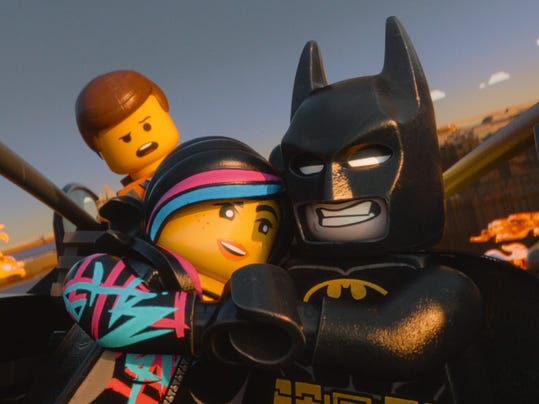
Monday was the last day of summer vacation for my youngest children and we decided to finish it off with a “family movie night.”  We chose The Lego Movie and let me just say I was totally impressed.  If you haven’t seen it and are now rolling your eyes, shame on you for being a hater.

First and foremost, TLM is an action comedy, not a kid’s movie.  It’s completely appropriate for children because, unlike most action comedies, the gratuity is not included – not because of its spectacular animation.  I would even argue that the “over the top, on the nose” lesson is no more OTP/OTN than any other action film.  It’s just that in this case, you haven’t been overwhelmed and numbed by explosions et al. so when you get to the preachy you’re still able to function mentally.

The movie is made from Legos in a cool rendering that doesn’t get old.  If you or your children had Legos you will see some familiar bricks.  The tone is fun throughout, a little silly sometimes, always funny, and there’s a ton going on in every seen.

Bruce Wayne?  Gob Bluth?  Either way, it's all Battitude.

The portrayal of Batman is by far and away the highlight of the production from a writing/casting direction.  Will Arnett steals the show and using the character in the manner they did was a clever bit.  Also of note is the opening of the story which completely and totally sets the tone of the entire film in about 30-60 seconds.  Once you’ve seen that, Batman makes sense.  Superman makes sense.  Han Solo makes sense.  The 80’s astronaut guy makes sense.  And Morgan Freeman can say or do anything and it makes sense.

Supporting the introduction is a consistent world that, although filled with Legos and builders, has rules and never stoops to dues ex machine.  Oh, wait, they do, but they do it in a manner consistent with the story and instead of taking you out, it makes you laugh and draws you in deeper.  Bravo.

The character names are terrific and, again, support the nature of the story.  There’s President Business, Bad Cop, and Wild Style on the one side with Batman, Gandalf, and Lando on the other.  Then there’s our hero, the everyman.

It glorifies creativity, encourages teamwork, and – this blew me away – exhorts us to not be tied to the directions (rules) but at the same time not to toss them out because sometimes (gasp) the only way to succeed is to follow the rules.  Really, the only issue I had was the “You are special, just like everyone else” message which drives the logical side of me crazy.  I get the fuzzy gooey point, but that’s not what special means.   ARRRGGGHHHH.


Enough of that.  What was my favorite part?  Hard to say… Everything Was Awesome.

Friday, August 22, 2014

TGI Joe Friday

I have a friend at work who likes to spend time in my office.  I don’t blame him, not only am I cool cat to hang with, I have one of the best views on the floor – made even better for him because he doesn’t have windows at all.  Our conversation tramples free-range over pretty much everything but generally falls into one of the cardinal directions of work, military service, fine dining, or film – a discussion of Casablanca is very efficient.

Recently he told me that Dragnet, Adam 12, and Emergency had all become streamable on Netflix.  I loved Emergency growing up – to this day, when someone says, “We’re on our way” I silent add “Rampart” every single time.  Every time.  Then I hear the siren sound in my head.  I’m really surprised I didn’t become a fireman.  Anyway, I remember that I watched Adam 12 but couldn’t tell you anything about it and the closest I ever came to Dragnet was handing over the video cassette of Dan Aykroid’s movie to rental customers.

It was time to check out some classic TV.  My friend’s description of Dragnet was just too juicy to miss out on.  Slang.  Public Service Announcements disguised as “on the nose” dialogue, and more voice over narration that you can shake a stick at.  Henry Morgan is just a bonus.

Dragnet lived up to its reputation.  I like it way better than Cops.  Even my children watch it.  Sort of.  There’s a lot of Candy Crushing going on too.  But a funny thing happened on the way to queueing up Dragnet – I spotted Alfred Hitchcock Presents.

We love it.  I remember the opening and the opening only from decades ago.  We’ve watched a couple of them and their great, if you are interested in a good story and observing how film has changed in the last 60 years.  Not all of my children like it, but their reactions have been very educational for me as a story teller.

1.       “That guy is annoying.  He says the other guy’s name every single time he talks.”  Parents observe.  “See?  He did it again.  ARRGGGGHHH!”  I think that the main character’s name was the single most often used word, squeezing out ‘and’, ‘the’, and ‘red bellied sap sucker.’  Today’s audience doesn’t like that – it’s condescending.

2.       “Dad.  What did he do?”  Hmm, sort of the point of the show, right?  “No really, Dad.  What’s going on?  I mean, its obvious right?”  Not the way Alfred rolls.  More to it.  “So tell me what’s going on, what did he do?  No, really, I NEED to know.”  The shows run about 25 minutes.  At minute 11 my daughter couldn’t stand it.  The suspense was too much.  Awesome.  I haven’t seen her react like that to anything.  And she loved the twist, the story “after” the story.

So the takeaway?  You don’t have to be nostalgic to enjoy an old program and a great story will reach across generations, bending convention and medium, to draw the audience in.  Black and white?  Who cares.  Cheese Whiz for dialogue?  So what.  Create an alluring mystery and then deliver on the promise – it will be a populist winner every time.

Friday, August 15, 2014

It should have been called Convergent

I read the book Divergent a few months ago.  I enjoyed it.  It wasn’t Hunger Games – far too much of the familiar, not enough of the original, but the storytelling was good and I was interested in reaching the end.  Certainly a good YA book, or for anyone interested in reading stories set in dystopian futures.

I have been waiting to catch the movie since.  Last week I had my chance.  Tom Petty suggested to us that “Waiting is the Hardest Part” but I’m going to respectfully disagree.  I haven’t been that disappointed in a movie since Jurassic Park 2.  Or maybe Tron 2.  Nope, Tron 2 was better.

It wasn’t terrible so much as a waste of time.  Unless you like Theo James in which case you think the movie was the best ever, Dad.  I am not sure if Theo can act, he didn’t get much of a chance.  The plot followed the book pretty closely but, in its execution, showed me exactly why the book felt a little flat to me.  The plot is not very good.

Which is to say that the plot is a fine plot, but we’ve seen it a million times.  There’s really no twist and the “up the stakes” moments are way to contrived and leave us with no place to go emotionally.  What really worked for the book was the interaction of the characters during training and how Tris finds her way after leaving her family and belief system behind.  The plot was just there to get everyone out of the kitchen and doing something while they chatted.

In the movie, all of the extra bits were taken away and we were left with a pretty bare plot and a “grand scheme” that wasn’t explained very well.  Book adaptations are hard.  Everyone says so.  You rarely hear anyone say, “The movie was better than the book” unless they are talking about Forest Gump.  Given that state of affairs, the screenscribe must be prepared to take certain license to create a visually oriented story based on the book, rather than a direct transcript edited for length.

Perhaps the most significant bit missing from the movie was the continuous fear about being dropped from training.  This section of the book was taught, emotionally charged and suspenseful because Tris was not only battling the Dauntless born, but her new friends (also her competition) and herself.  One of the defining scenes in the book was completely redone in the film – and moved far later in the narrative – removing any sense whatsoever of the “sibling rivalry.”

The supporting characters were also not drawn, or cast, very well.  If I had not read the book I’d have had no idea who any of them were.  As it was, my kids were lost during the story because to them, the same guy was doing all sorts of completely different things – and then he was supposed to be dead but wasn’t so what was up with that?


Ms. Roth should be congratulated on her novel.  It is an admirable work at a level I am still striving to reach.  The teens I’ve talked to all love the film and, since they are the target audience, it appears to have been a success.  But for me, the overall experience was like going to Disney and having it rain every single day.  All day.  And my clothes are in the world of lost luggage.

Friday, August 8, 2014

Extracting Inception

This change in the post schedule is messing with me.  I keep getting confused about what I’m supposed to be writing.  I could claim that it’s my ball and we’ll play whatever game I chose, but that sort of defeats the challenge – writing to deadline and prompt.

After thinking carefully, I recalled that Friday is when I look at a specific movie, script or screen.  It’s supposed to be script, but I don’t always read as many scripts as I should to become an awesome screenwriter.  Watching movies can also be helpful, if you watch for such key things as structure, dialogue, character development...

I watched Inception this week for that very purpose.  I saw it in the theater and enjoyed it.  It’s #1’s favorite movie.  After seeing way too many previews for Interstellar and reading a few interviews with Christopher Nolan, I was ready to study his mind twisting thriller rather than just go along for the ride.

There is a clear protagonist and the fundamental question is asked within the first few minutes – “What is real?”  The rest flows organically and the film isn’t afraid to ponder deep questions ranging from “Why is the point” to substance abuse.  Over and over, our hero is presented with the argument that we should make/chose our own reality and each time he fights back with a resounding, “No!”

I like that.  In a world guided by situational ethics, the dedication of Leonardo DiCaprio’s character to one absolute truth is both remarkable and admirable.  He sacrifices tremendously for truth.  Not that he’s a shining knight, he has his flaws and is less than honest with his team. There’s also the underlying conceit that what he does is illegal.  Sort of an Ocean’s 11 approach to the law.

The visual effects are very good and Mr. Nolan gets away with a lot because he filming dreams so it doesn’t have to make sense.  But it’s far from random.  Each scene is carefully structured and builds to the climax.  The story guides us so seamlessly that it’s easy to miss that we’re being set up.

The pace slows in a few places but it picks back up quickly and reminds us that Inception is not a shoot ‘em up.  It’s a serious look at how we see ourselves and our world.  I finished watching thinking that I definitely needed to find a copy of the script.


One aspect of the narrative that really resonated with me was how the structure of shared dreaming worked.  Two supporting characters discuss it, a sort of master/apprentice, and that freed up the protagonist to be used later, adding a twist to the plot based on his issues with construction/navigation while they were all dreaming.

It was also interesting how a supporting character was able to drive the story and draw plot elements from the protagonist.  If Leo had been the one to reveal everything all the way through, we’d have become quite sick of him.


There’s a bit of violence but it isn’t anything we don’t see on TV.  Ditto for the language (except for the seeing part, it’s more of hearing for that).  If you haven’t seen it and enjoy twists, turns, and deep questions, I recommend Inception.  It's Shutter Island without the sick feeling.

Friday, August 1, 2014

"I feel like you're breathing helium and I'm breathing oxygen."

Friday’s post.  Awesome.  If you’re reading the blog, it’s FRIDAY.  If you’re reading the subscription it’s SATURDAY and even better.  If you’re like me (which you aren’t, sorry) then it’s THURSDAY which isn’t as good as Friday but I’m on the train home so it’s almost that good.  And, back in the day, Magnum P.I. was on Thursday nights.  Then it was Friends and Seinfeld.  What is it now?  I haven’t had T.V. in years.

Which brings me to an interesting observation.  I enjoy reading screenplays as much as watching movies.  Sometimes, like today, probably more than the movie itself.  I read Before Midnight on the recommendation that it was truly terrific.  Um.  Terrific, unless you are Jason Everett Bear, is subjective and I didn’t think it was terrific.  I thought it was okay as a read and never plan to see it.  Why?  Nothing happens.  Which is to say that plenty happens, but not visually so it shouldn’t actually be a film.  It reminded me very much of a short story.


As a short story it was good.  Nearly the entire film is dialogue.  I’m talking 95% of the text is dialogue, the other 5% is scene headings and character names.  There’s a smattering of ‘R’ material including language and almost sex, but I suspect that’s only there so people will watch it.  You could certainly cut it and still have exactly the same conversation.

It’s two conversations, really.  A running dialogue between the protagonists and a dinner party that kicks off the second act.  Okay, a third.  The opening scene introduces us to Jesse during a lopsided conversation with a character we never see again.

It’s a fairly banal conversation too.  They mostly affect airs and try to sound profound but then drop to clever and crude.  It’s meant to emulate real life and they discuss real life quite a lot.  Mostly about how real life is nothing like a fairy tale and people don’t really fall in love forever and isn’t everything in the world all messed up?  (Of course they don’t say ‘messed’ up.)

The voice of dissent from that world view was not very strong and the closing scene never really answers the question although we know precisely how the main characters feel.  I myself absolutely believe in forever love and found the idea that it was a crock to be supported only by selfishness and a hedonistic desire to experience bliss every moment, always right, always the hero, and always with something better just at the next table.

Silly.  Any cocaine addict will tell you that high is relative and when you’re high you aren’t trying to get high.  It’s not being high that makes being high seem so good.  You can’t feel appreciated unless you’re felt unappreciated first.  And emotion needs to be refreshed.  Like Judo.  You want to control someone with a joint lock?  Don’t keep the pain on.  Ramp it up and then back it off.  Otherwise your opponent will get used to it and kick your butt.

So the script itself was well written and read quickly and, if the format was adjusted a bit, might appear in The New Yorker or The Atlantic.  The characters were well drawn and the voices were very distinct.  It was impressive, actually.  But dull as film.  Talk, talk, talk.


And it was depressing.  I’m sorry if you love it.  Just wasn’t my cup of tea.

Friday, July 25, 2014

The Way, Way Back


I’ve been on a roll lately for reading good scripts and The Way, Way Back kept the streak going.  It was laugh out loud funny (probably because it’s totally my kind of humor and rocked the ‘80s) but I can’t help but think there was more to it than that.

The voice was just plain fun.  The tone of everything.  Serious matters where discussed, events happened, people changed, but despite the upheaval, it still read like a great summer vacation.  The basic idea is that a 14 year old boy is dragged out to a beach vacation by his mother’s boyfriend.  He’s introverted and wants to be with his father instead.

We meet a remarkable cast of characters that are distinct and consistent and comfortable, like watching TV Land.  Naturally, our protagonist comes out of his shell and gets the girl, but it isn’t quite the way you would expect – if you read straight through like you were watching and don’t spend too much time analyzing.  The flow of the story is smooth and logical and while I caught myself wondering, about halfway through, if anything was actually going to happen, I immediately countered with, ‘I don’t care, it’s smooth reading and fun, so who cares?’

Sort of like summer vacation.

The writing is top shelf.  It’s easy to read without being stilted or condescending.  The cultural references add tremendous flavor while also lending a bit of street cred to the whimsical/reflective nature of the story.  It doesn’t take itself too seriously and the visualizations are powerful.  Fat kid knocking loose the kids wedged in the water slide.  Teenage boy singing his heart out on “I Can’t Fight This Feeling Anymore.”  Adults arguing about whether Mr. Mister sang, “Kyrie Elision” or “Carry a laser.”  An entire scene composed of break-dancing moves.  Pac Man at the pizza joint.

Totally awesome.


I think I’m going to read it again.  Today.  I will certainly read it again next summer.  I mean, I had those conversations with my friends when I was 14.  And I still sing my heart out on “I Can’t Fight This Feeling.” 

Friday, July 18, 2014

Rush -- The script behind the film

For today’s post you need to know a little something about me.  I like cars.  Most cars are interesting to me.  European sports cars (except for Porsches) will distract me from pretty much everything.  My first car was a Triumph TR7 – and no, if you enter it as the answer to password challenge question it won’t get you in.  I’ve always wanted a Lotus.  Any Lotus, even a Europa.  This morning I saw a Mini Cooper with a “Bazinga” graphic and immediately felt the cold clutch of envy.

For me, the only motorsport worth watching (other than Rally) is Formula 1.  Always has been.  I’m not sure how old I was the first time I saw a F1 car making the circuit – maybe 4? – but I’ve been fascinated by it ever since.  I should quantify that.  If I’m anywhere that has a F1 race on I want to watch it, but the last season I actively followed was 1994 when Senna died.  The period that really captured my imagination was the late sixties/early seventies when everything changed.  The era of Rindt and Moss.  Lotus, Ferrari, McLaren.  In my opinion 1970 was perhaps the greatest season ever.


Rush is the story of the 1976 Gran Prix season and the rivalry between Lauda and Hunt.  I’m biased.  It was very well written.  It captured the attitude of the drivers, the circus that supports them, and the life v death tension of racing at that level.  It’s an adult script, filled with substance abuse, references to promiscuous sexual activity, and gore which earn the film its ‘R’ rating, but the prose is more like reporting than describing.  D.H. Lawrence was far more descriptive in the novel I read for high school English.  And it isn’t all bad either, whilst Hunt is the carefree playboy party animal, Lauda is a the meticulous businessman, introverted and monogamous, who is successful because of his incredible self-control.   Hunt is often criticized for his lifestyle and attitude and actually admits to a bit of self-loathing.

Rush is a work of historical fiction.  I don’t know either Hunt or Lauda but their representation is an accurate reflection of how they were portrayed in the press.  The on and off track sequences are tied together seamlessly and if you don’t believe that a written description of an auto race can get your adrenaline flowing, you should read this script.  Or the book Gran Prix Year.

The script did well at distilling the essence of the rivalry between these two great drivers and turning it into a compelling story, complete with sub plots, action, love stories, and character arcs.  Dramatizing actual events is an incredibly difficult task but Rush makes it look easy.  Interestingly, I found this story to be far more compelling and suspenseful than the fictitious Driven – even knowing how it all turned out.  The true story is so good that heavy handed creative license wasn’t required.

As I said, I’m biased, but…

“When I saw it the first time I was impressed. There was no Hollywood changes or things changed a little bit Hollywood-like. It is very accurate. And this really surprised me very positively.” -Niki Lauda (Carjam TV Interview, September, 2013)

Friday, July 11, 2014

A much more down to earth take on Taken

You may (or may not) recall that I made the first cut in the Blue Cat screenplay competition.  One of the winners generated a lot of buzz because his script got picked up for production and had Hugh Jackman behind it.  I’ve just finished the script, Prisoners, and it is fantastic.

I mean that.  It is an amazing story.  Completely drew me in.  It was so well written that at one point I actually jumped.  Just like I would have watching.  I think I even made a noise because some of the people on the train looked at me.  It’s that good.

I don’t know how good the movie is, but this is an amazing piece of writing.  Sparse but seasoned.  It’s paced well and even now, fifteen minutes later, my adrenaline is still flowing.  It reminded a little of A Simple Plan in that the basic story line was very straightforward but just kept building with more twists and setbacks on every page.


I’m not sure that I’ve a read a script that built tension so well.  It’s a gradual increase, no jumps, and there’s not let up.  Like the fish in science class on the Bunsen burner, you get warmer and warmer without realizing that you’re about to boil and then – you boil.

The story is about the kidnapping of two young girls and what their parents (and the police) do to find them.  It’s disturbing.  It’s violent.  It’s gory.  There’s a bit of bad language.  It’s… a nightmare.  But through that darkness is a tale of people who will stop at nothing to get what they want.

I have children.  I am terrified that one day one of them will be taken.  I remember Sarah Woods.  And when I think about how far I would go to get my child back I think about Sarah’s parents, their trust in God and forgiveness of the man who took her and I feel guilty because I know that I would not be able to do that.


This story looks at the other direction, at how far Everyman would fall to get back his little girl.  Snakes and all.  If you’re up for it, you can find the script here.

Friday, July 4, 2014

Close the Loop

Welcome to the Fourth of July post.  I’ve cheated a bit and am writing on the Third of July, though that’s neither here nor there because if you’ve subscribed to the email delivery, you probably aren’t seeing this until the Fifth of July.  Anyway, how about we look at a script with some fireworks?


Looper is a film that I have read a lot about in my “become a successful screenwriter” circles.  It’s lauded for all sorts of things ranging from how time travel is [not] explained to brilliant characterization.  It does all of those things, sure, but at heart, it’s a great action story that moves at the pace of a Bourne and I enjoyed it.

I did not watch the movie because there’s a lot of extra content boosting it solidly into ‘R’ territory and as I’ve covered in the past, that’s not entertainment to me.  I was hesitant about the script but I’ve been pleasantly surprised by several films and I was curious about the story.  I mean really, time traveling hit men?  That’s just neat.

The script left nearly everything to the imagination, descriptions were not especially graphic and the adult language was minimal – nothing like trying to read Tarantino.  I did find parts of it confusing and flipped back a few pages more than once.  I think that’s because the writer was also the director so he knew exactly what he wanted to film and was able to explain things to everyone else on set.  I certainly couldn’t get away with some of the scenes, everybody’d be saying, “What?”

The basic premise is here on IMDB.  I found the world to be consistent and believable.  I really liked how different old and young Joe were.  They were the same at the core, but experience and age changed Joe.  I also liked that it wasn’t a walk in the park for any of the characters.  There were setbacks and then more setbacks.  Flashbacks were handled very smoothly.  And there was a lot of action.

I read it quickly and wasn’t sure how it was going to end.  There were several possible outcomes that would have made sense.  I wasn’t expecting the one chosen.  But it worked very well.  I can see why the script appealed to Bruce Willis.

One of the more “famous” scenes from the film involves old and young Joe sitting in a diner discussing time travel.  They don’t explain it.  They say it’s complicated and move on.  Sometimes you don’t have to explain how everything works, you just need a world where it makes sense that it would be there.  Like here, on the train, there are a hundred iPhone.  It would take forever to explain how they work to you…


If you like reading scripts or loved the movie, I do recommend Looper but if you’re just getting started there are better choices.  It was much easier to follow than Django Unchained but then so was “Canterbury Tales.”